
How does the brain try to protect us, even when it seems to be attacking us?
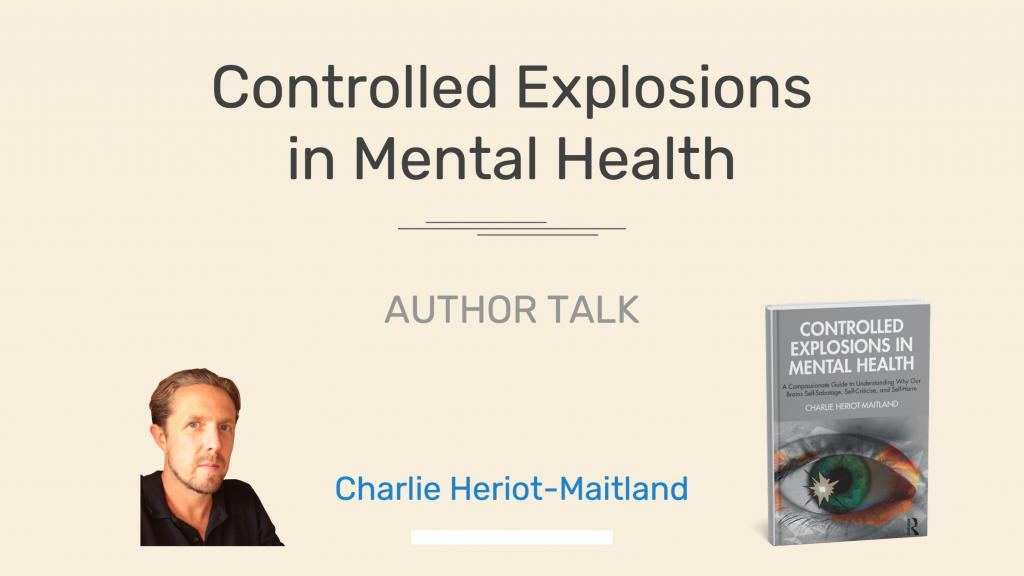
In a recent Author Talk for Controlled Explosions in Mental Health, I explored a core idea behind the framework: that many of the patterns we struggle with – including self-criticism – can be understood as protective strategies shaped by learning and history.
One of the slides in this talk looks at how the brain attempts to manage threat. When outward anger, protest, or vulnerability once felt unsafe, the system may learn to turn that energy inward. In this sense, self-criticism can function as an internal “submission-maker” – a way of reducing conflict, minimising risk, or pre-empting external attack.
This doesn’t make self-criticism benign. It can be painful and limiting. But understanding its protective logic changes how we relate to it.
You can watch a short 3-minute clip from the talk in the Videos page of the Studio section, which also has an external link to the full 75-minute Author Talk.
You must be logged in to post a comment.